

Pleasant Street Lexington
Pointknown was engaged by a design/build team to document a unique residential property on Pleasant Street in Lexington, Massachusetts, creating a complete existing-conditions package for a complex converted carriage house and its surrounding site. The project combined multiple reality capture technologies into a coordinated digital baseline that would allow the team to move forward with design decisions quickly and confidently.
A reliable foundation
before design begins.
Pleasant Street required more than a basic set of measurements. The project demanded an accurate representation of the existing residence, surrounding site conditions, roof geometry, grade changes, and exterior features so the design team could begin with dependable information instead of assumptions.
Pointknown documented the property using laser scanning, field verification, and coordinated reality capture workflows before translating that information into organized drawings, a Revit existing conditions model, and supporting documentation. Every deliverable was created to help architects and consultants understand the building as it actually exists.
The result is a coordinated digital record that supports renovation planning, design development, consultant coordination, and client review while reducing uncertainty throughout the early stages of the project.
The building and the site needed to be understood together
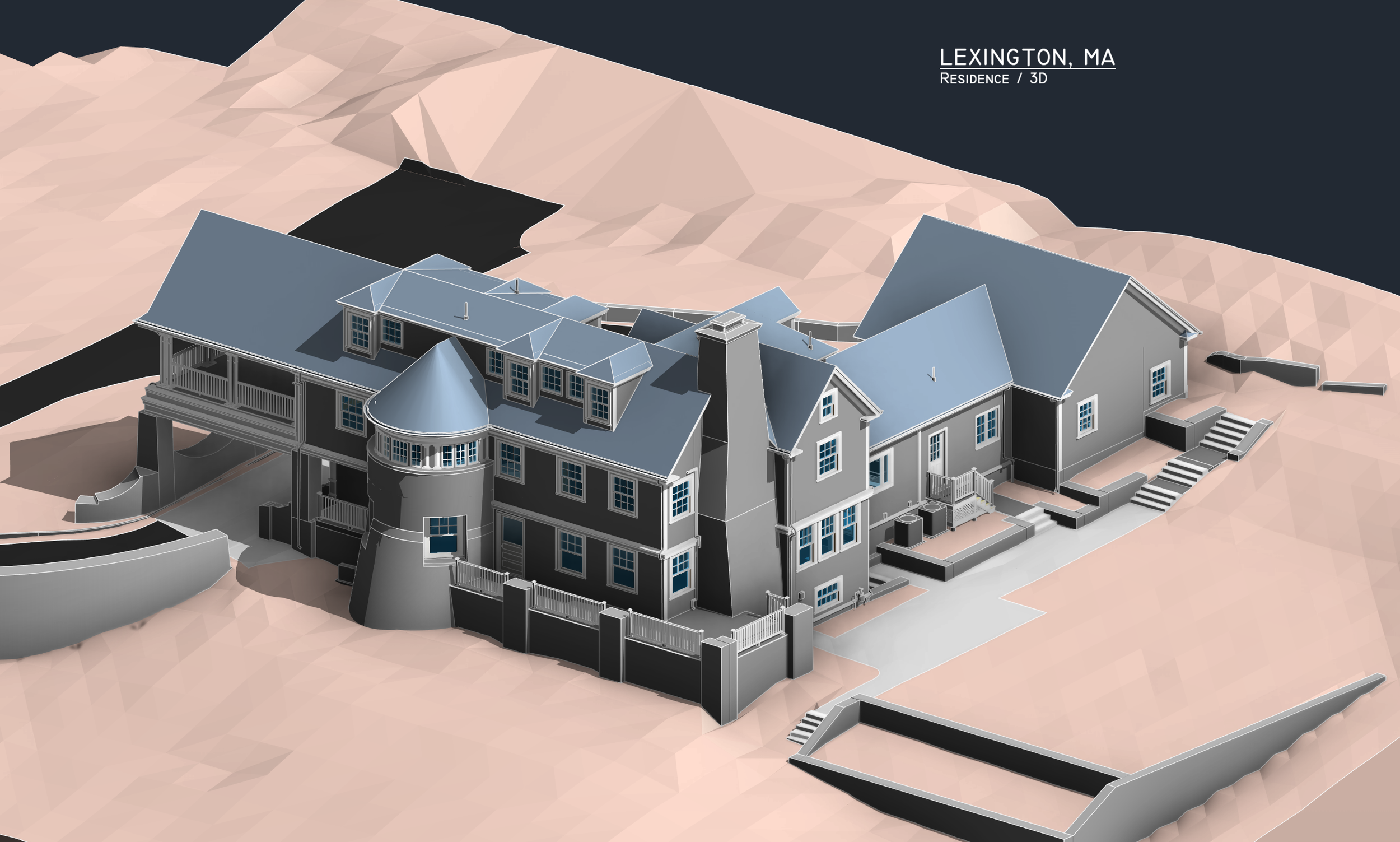
The surrounding conditions were part of the story: retaining walls, patios, decks, stairs, driveway conditions, topography, and the way the house sits into the landscape. Drone capture helped clarify roof geometry and site relationships that are difficult to understand from the ground alone.
From existing conditions to coordinated project documentation.
Every Pointknown project follows the same objective: capture the building accurately, translate the information into dependable design files, and organize the deliverables so architects, owners, and consultants can begin work with confidence.
Capture
Laser scanning, photography, field measurements, and site verification documented the existing residence, surrounding grade, exterior conditions, and architectural features before design work began.
Translate
The field data was converted into coordinated Revit models, CAD drawings, and existing conditions documentation that accurately represents the building and supports architectural workflows.
Deliver
The completed documentation package gave the project team a reliable digital baseline for planning, renovation, consultant coordination, and future design decisions—all organized and ready to use.
Existing conditions captured across every critical system
Every deliverable is created to help architects, owners, and consultants move forward with reliable existing conditions information. From coordinated models to measured drawings and LiDAR-supported documentation, each output is designed to reduce uncertainty before design begins.
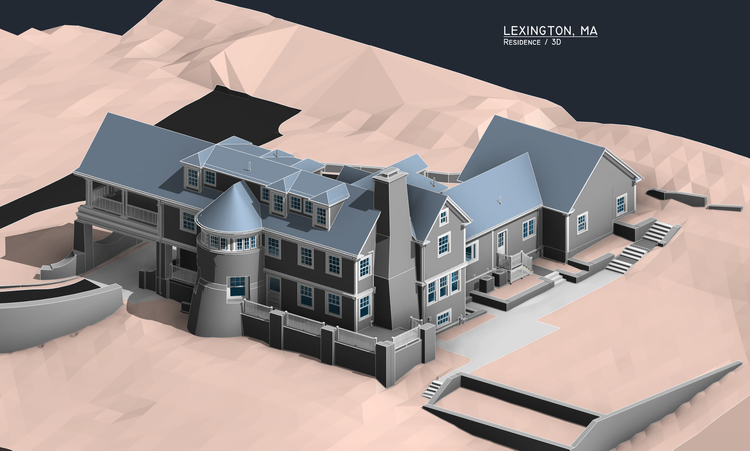
Existing conditions modeled for design
A coordinated Revit model documenting walls, roof geometry, openings, stairs, site features, and existing building conditions to support renovation planning.
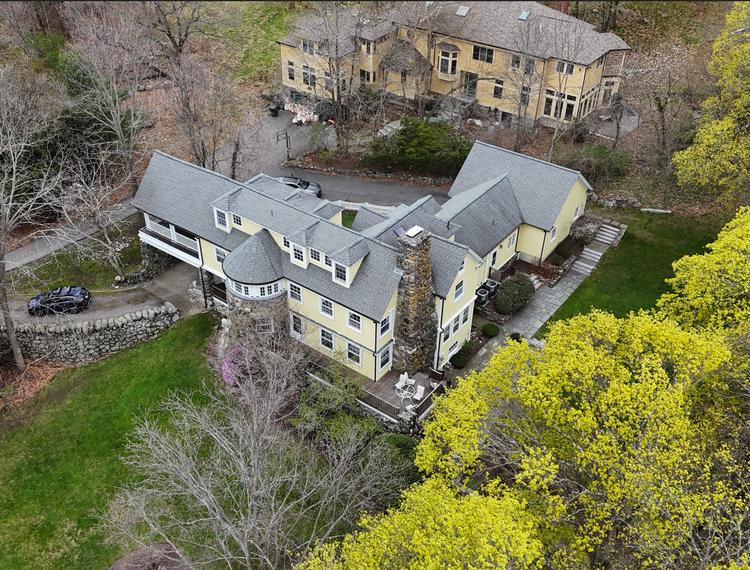
Site context from above
Aerial imagery captures the residence within its surroundings, documenting roof forms, landscape, retaining walls, patios, and property relationships.
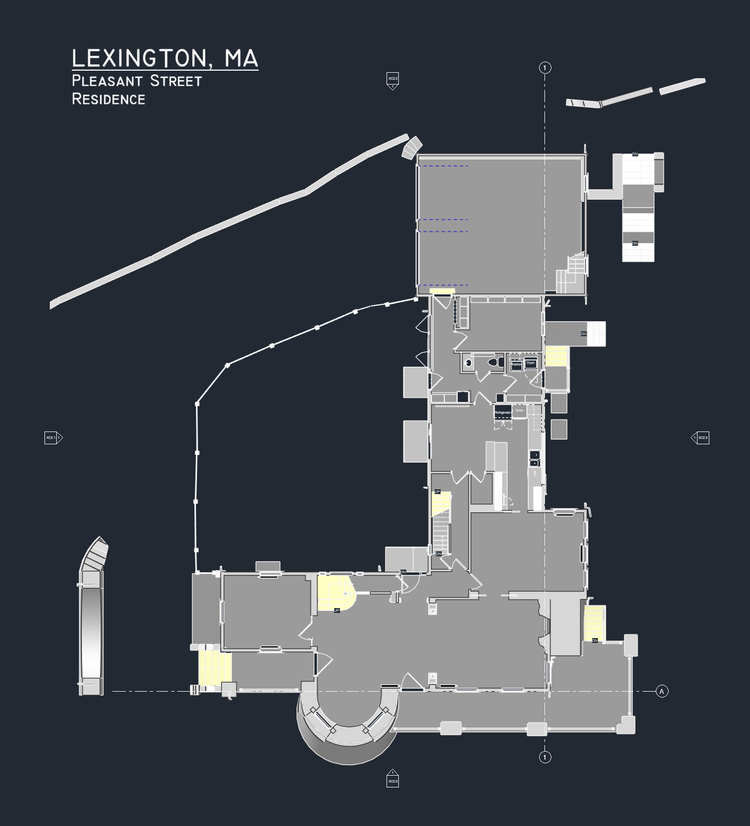
Existing conditions documented
Measured plans provide architects with a dependable understanding of room layouts, circulation, dimensions, and existing building geometry.
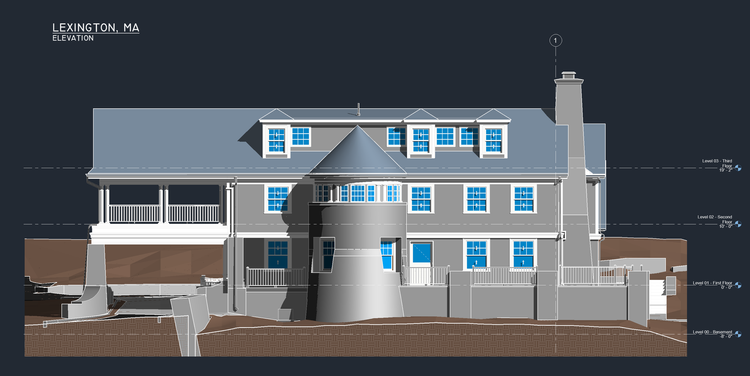
Exterior geometry captured
Elevation drawings document façade composition, rooflines, grade changes, chimneys, windows, and architectural details before design begins.
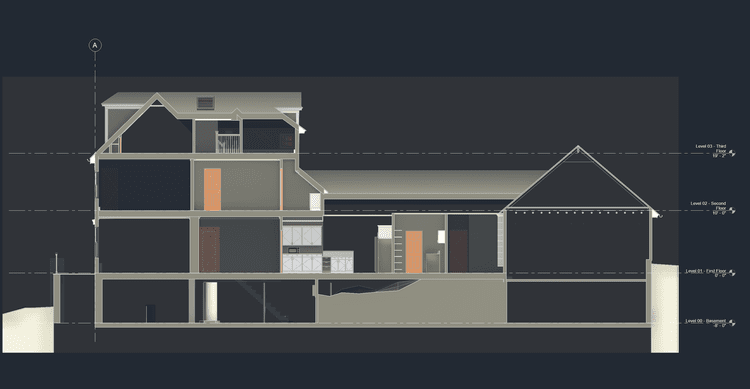
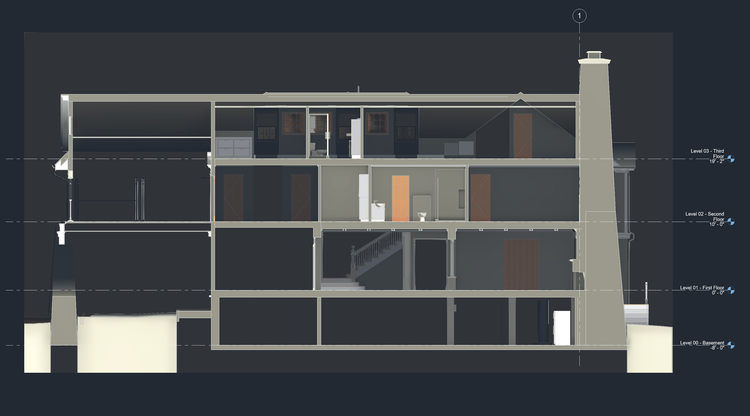
Understanding the building vertically
Section views reveal floor-to-floor relationships, ceiling heights, roof geometry, and internal building conditions that plans alone cannot fully explain.
Reality capture supporting accuracy
Laser scanning provides the measured information behind the drawings and model, helping reduce assumptions while improving coordination across the project team.
Capture enough context so design starts with fewer assumptions
A complete existing-conditions package gives the project team more than measurements. It creates a reliable digital reference of the property that can be reviewed, shared, and used throughout the design process.
The deliverable has to work after we leave the site.
The Lexington documentation package was created to help owners, architects, and project teams understand the property without relying only on another site visit. Every capture method and deliverable works together to create a dependable starting point for future decisions.
More than files. A complete understanding of the building.
The Lexington documentation package combined reality capture, digital modeling, and visual context into one coordinated baseline. Each deliverable was created to help the design team understand existing conditions clearly before moving into planning, renovation, and design decisions.
Revit Existing Conditions Model
A coordinated 3D building model representing the residence, architectural elements, roof geometry, openings, and existing conditions as a reliable foundation for future design work.
GeoSLAM LiDAR Scanning
High-accuracy laser scanning captured the existing building conditions and created the measured foundation used to develop the documentation package.
Drone Capture
Aerial imagery documented roof conditions, site relationships, landscape elements, and exterior features from a complete property perspective.
360 Photo + Video
Immersive visual documentation allowed the team to remotely review spaces, conditions, and details beyond traditional drawings.
Site + Topography Documentation
Existing site conditions, grades, exterior elements, and surrounding context were documented to provide a complete understanding of the property.
This was not a simple house.
Converted carriage houses often carry layers of history, additions, adjustments, and unique construction logic. Pleasant Street was no exception. Accurate documentation was critical to understanding how the property was built before moving into the next phase of design.
Fewer assumptions
The roof system included multiple roof types, changing slopes, and interlocking forms. Detailed documentation helped replace uncertainty with verified existing conditions.
Better digital coordination
A coordinated model gave the team a shared understanding of the building, allowing design questions and complex conditions to be reviewed before they became field problems.
Confident design decisions
With accurate building geometry, site information, and visual references, the team could evaluate options and move forward from a reliable baseline.
The value is not in the scan itself. It is in what your team can do next.
Design-ready deliverables
Measured information is structured into clean Revit and CAD outputs so architects, owners, and developers can move quickly.
Clear communication
Pointknown focuses on clarity. The process stays in the background. The usable result stays front and center.
One source of truth
A single field effort supports visualization, planning, modeling, and documentation—without repeated site visits or fragmented information.
If you are planning, renovating, leasing, or evaluating a building, clear existing conditions matter.
Pointknown helps design teams and property stakeholders move forward with confidence by turning existing buildings into usable, decision-ready information.