
Carnegie Free Library
Pointknown provided reality capture and existing-conditions modeling services for the historic Carnegie Free Library of Allegheny as part of its transformation into MuseumLab, an extension of the Children’s Museum of Pittsburgh created for older youth focused on art, technology, and creative exploration. The project required accurate documentation of a 45,000-square-foot historic structure to support adaptive reuse planning and future design work.
A historic building.
A reliable foundation for what comes next
For the Carnegie Free Library of Allegheny, Pointknown created an existing-conditions documentation package to support the building’s transformation into MuseumLab. The project required capturing a complex historic structure and translating it into reliable digital information the design team could use for planning and adaptive reuse.
Historic buildings often contain unique conditions that cannot be understood through assumptions alone. Our role was to capture the architecture, interior spaces, and existing geometry with precision, then organize that information into a Revit model that gave the project team a clearer starting point for future design decisions.
Understanding the building beyond individual rooms.
For adaptive reuse projects, the surrounding context matters. The building’s massing, vertical relationships, entries, circulation, and connection to Allegheny Square all influence how the next phase of design moves forward.
A complete workflow from historic capture to usable documentation
The process combined precise field capture, technical modeling, and organized deliverables to create a reliable digital record of the Carnegie Free Library for adaptive reuse planning.
Capture
Document the existing building — High-definition terrestrial scanning and SLAM capture workflows were used to record the historic structure, including key architectural elements, interior spaces, and complex building conditions.
Translate
Convert reality into usable information — Registered point cloud data was transformed into a coordinated Revit existing conditions model that reflected the building’s geometry and supported future design decisions.
Share
Provide a dependable design foundation — The final documentation package gave the project team a clear reference for renovation planning, coordination, and adaptive reuse of this historic civic landmark.
Existing conditions captured for historic adaptive reuse
A coordinated documentation package combining reality capture, Revit modeling, technical drawings, and visual references to support the transformation of a historic building into a reliable foundation for future design.
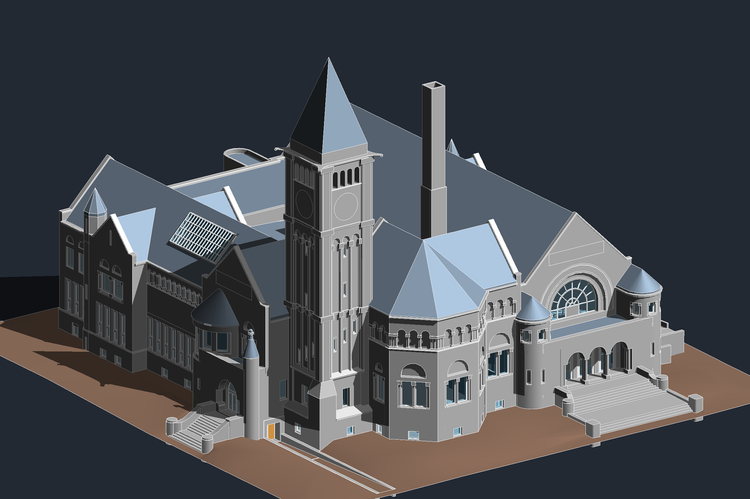
A reliable digital record of a historic structure
The existing conditions Revit model translated the complex geometry of the Carnegie Free Library into a coordinated digital foundation for adaptive reuse planning and design coordination.
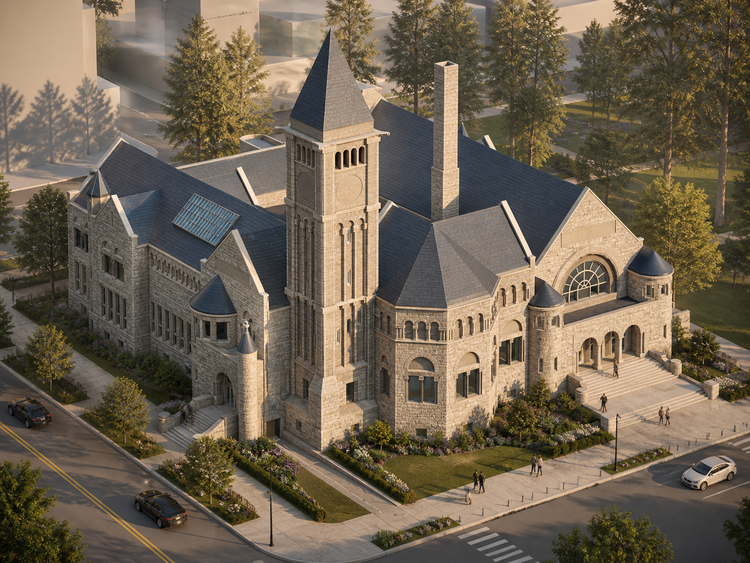
Design context made easier to understand
The Revit model supported architectural visualization, helping communicate the building's future transformation within Allegheny Square.
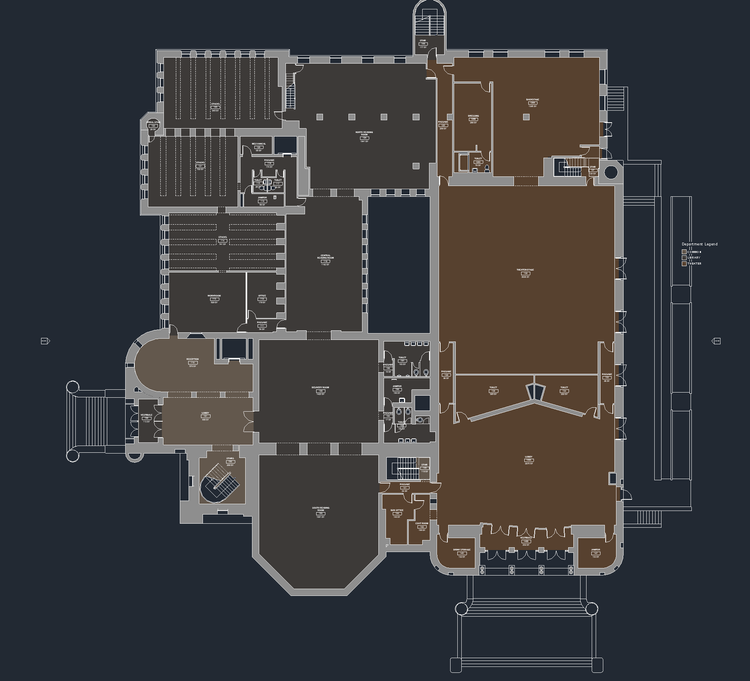
Existing conditions organized clearly
Floor plan outputs provided a practical reference for understanding layouts, circulation, and existing building conditions.
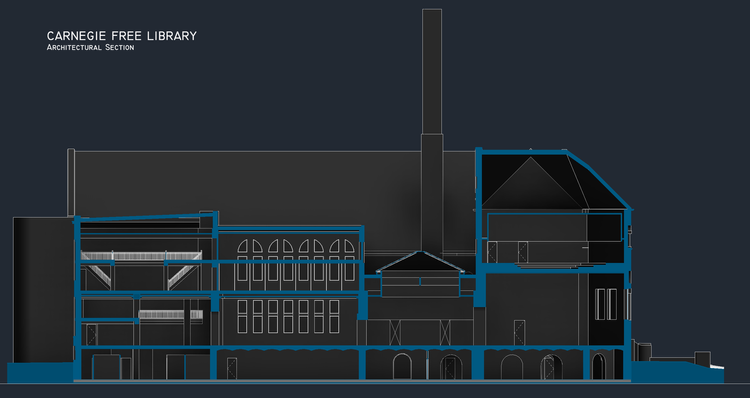
Complex building relationships documented
Sections revealed vertical relationships, historic spatial conditions, and the unique geometry of the existing structure.
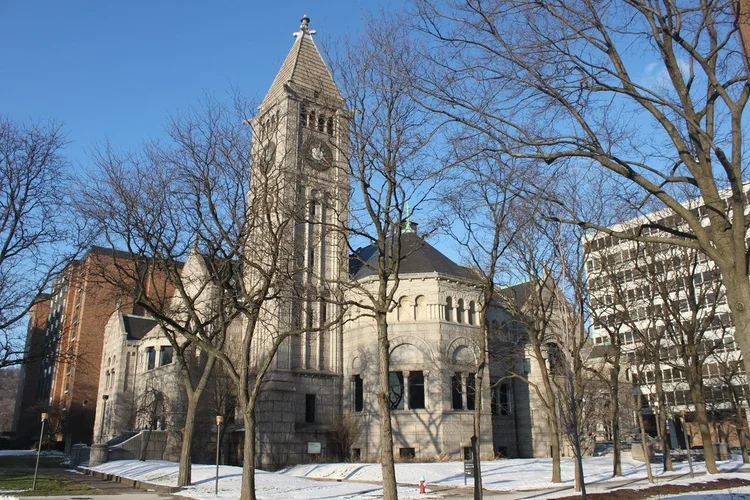
Architectural character preserved digitally
Exterior documentation captured the stone detailing, tower elements, and defining features of the Romanesque Revival building.
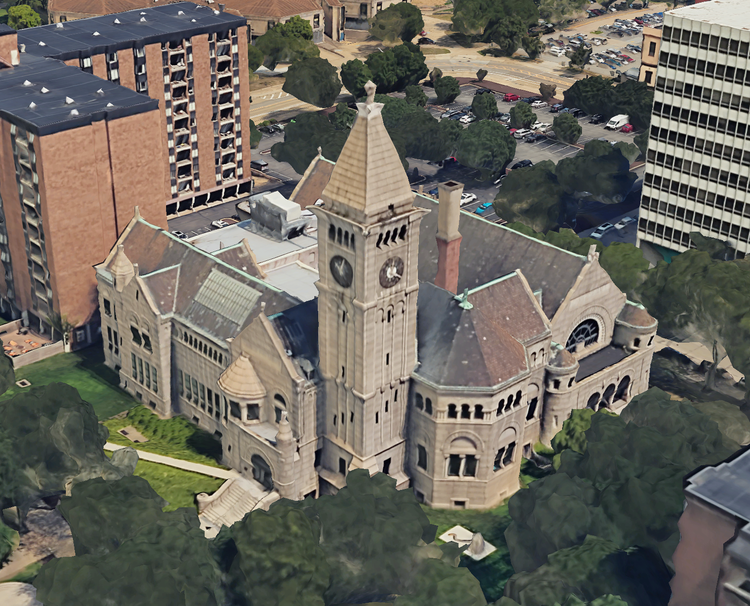
The building understood within its surroundings
Aerial context views helped document the relationship between the library, Allegheny Square, surrounding circulation, and the broader project environment.
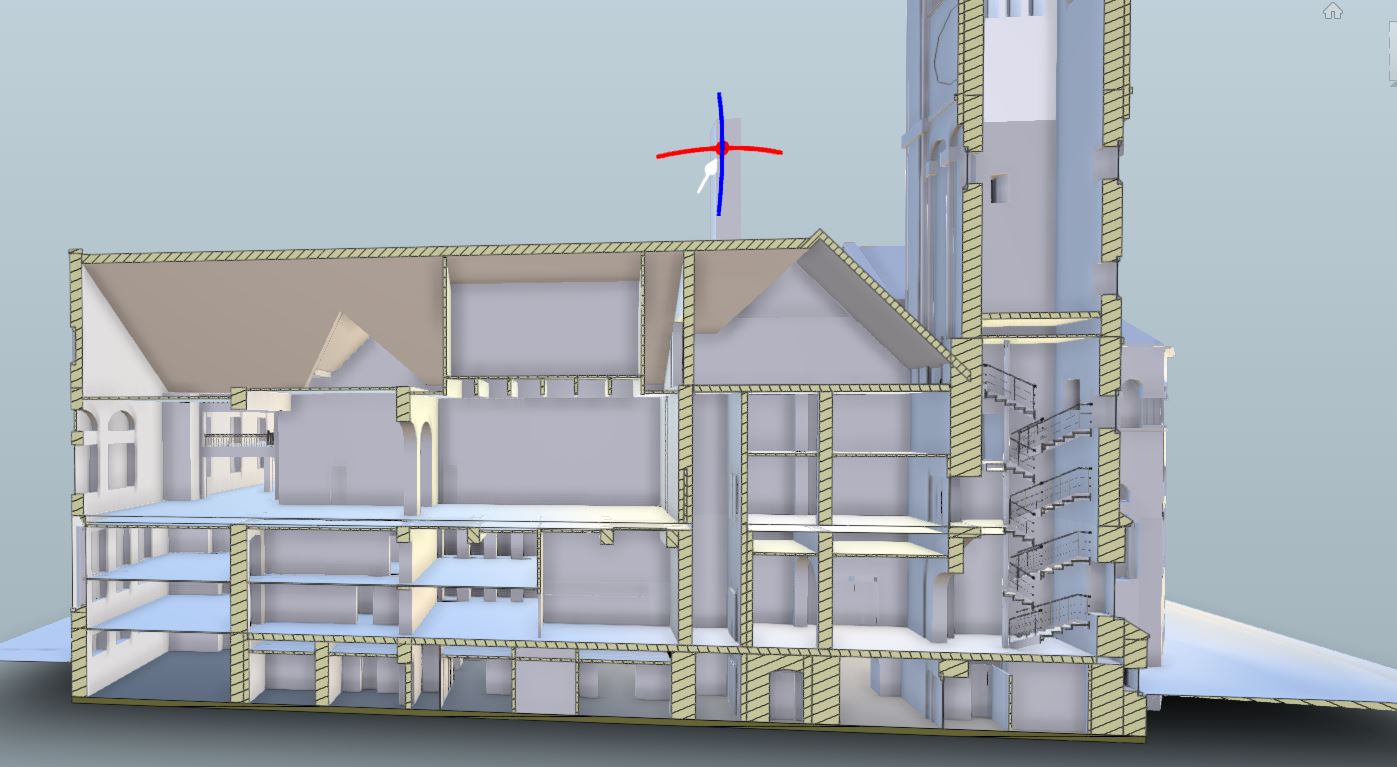
Complex interior relationships made visible
An early 3D section model makes the building's multiple levels, interior spaces, stairs, roof forms, and vertical relationships easier to understand in a single view.
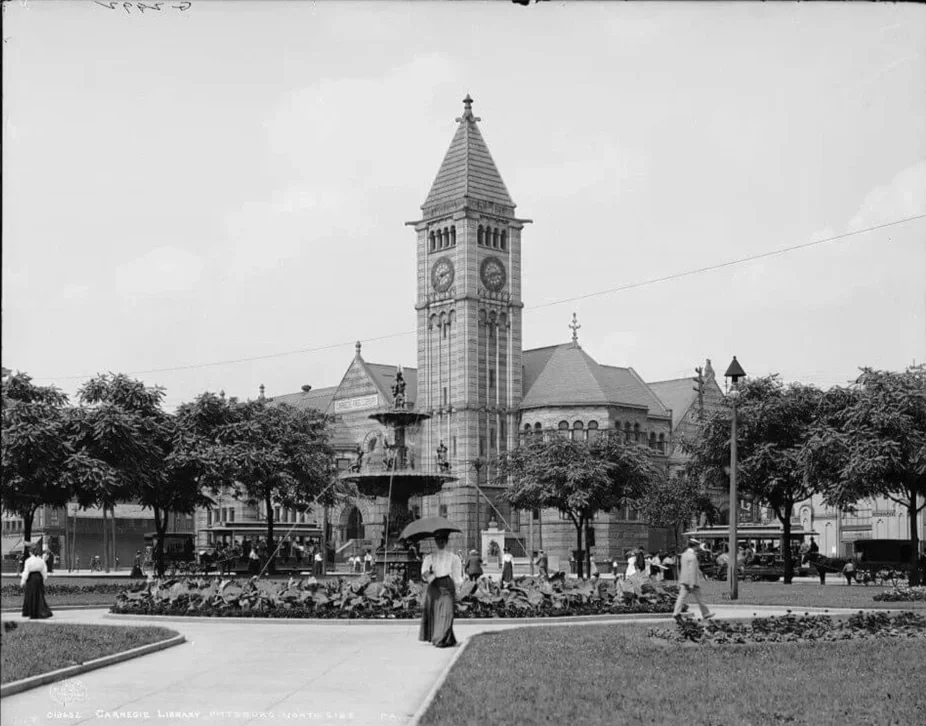
The building's historic civic identity provides context for its transformation into MuseumLab.
A historic building, documented for its next chapter
The former Carnegie Free Library of Allegheny was being transformed into MuseumLab, an extension of the Children’s Museum of Pittsburgh created for older youth to explore art, technology, making, and creative learning.
That transformation gave a historic civic building a new public purpose while preserving the architectural character and complexity of the existing structure.
Pointknown documented the building and developed a reliable Revit existing conditions model so the design team could move into planning and adaptive reuse with a clearer understanding of what was already there.
Experience shows up in the handoff
The best documentation teams do not simply collect data. They know what matters, what to ignore, what to model, what to share, and how to package it so the next team can work.
We scope for the decision ahead
Each capture effort is shaped around what the client, architect, consultants, and builder need to understand next.
We know the deliverable ecosystem
Revit, CAD, SketchUp, PDF, drone media, 360 photography, and shared file structures all play different roles.
We make complex properties easier to communicate
The goal is not to show every piece of data. The goal is to make the right information accessible, clear, and usable.
If you are planning, renovating, leasing, or evaluating a building, clear existing conditions matter.
Pointknown helps design teams and property stakeholders move forward with confidence by turning existing buildings into usable, decision-ready information.