
Residential | Commercial | Industrial
Saks Fifth Avenue NYC
Existing conditions documentation and coordinated building modeling for one of Manhattan’s most recognizable retail landmarks—captured at night, organized in Revit, and built to support ongoing planning, renovation, and long-term decision making.
A landmark building, captured with discipline.
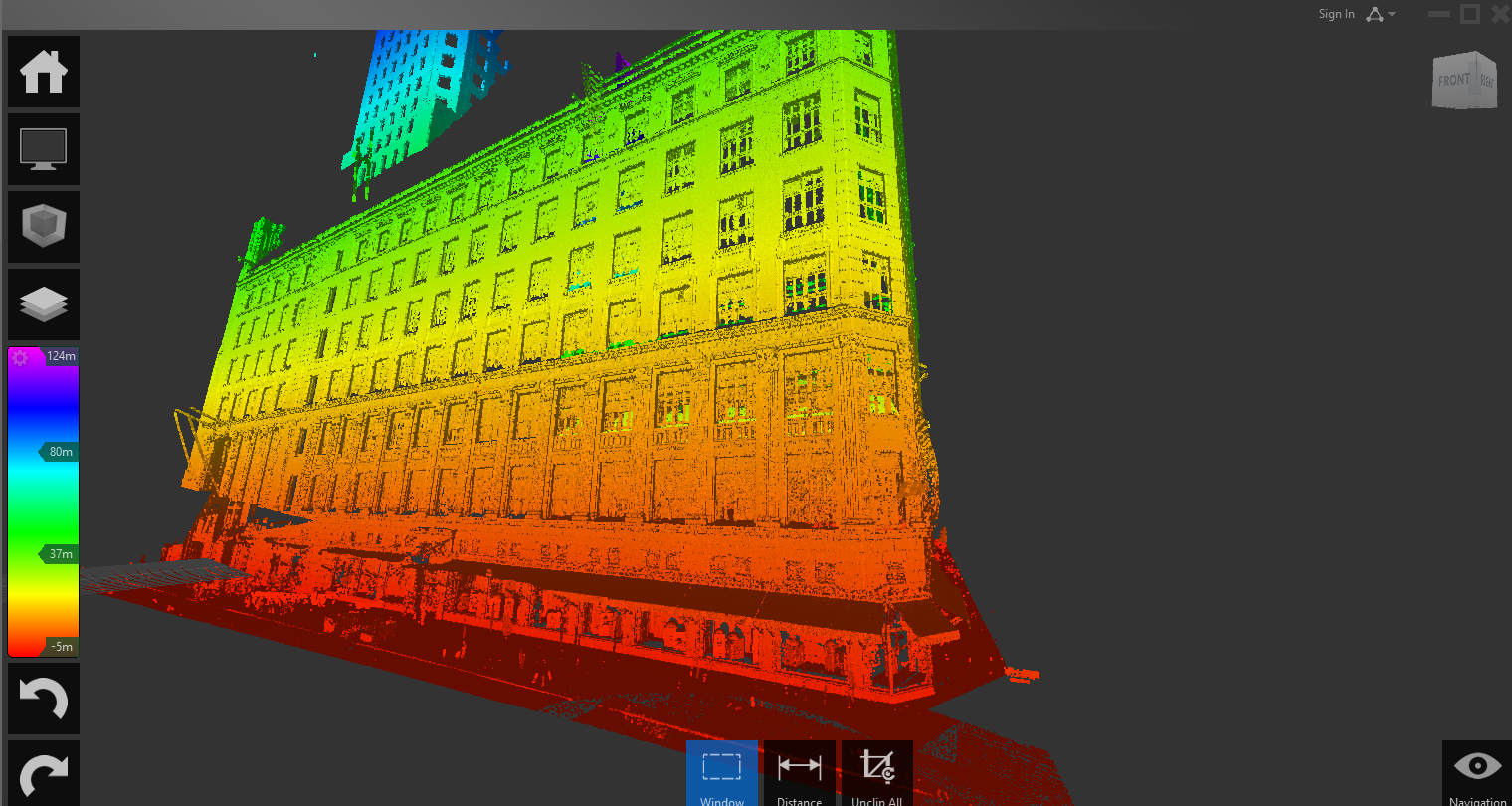
Before mobile SLAM streamlined site capture, projects like this depended on planning, patience, and a rigorous blend of laser scanning, field verification, photography, and modeling judgment.
Saks Fifth Avenue’s New York flagship occupies an extraordinary piece of Midtown. For Pointknown, the task was not simply to document a storefront or a few public areas. The assignment was to build a dependable digital baseline for an active, architecturally significant retail property with real scale, real complexity, and real downstream value.
Exterior conditions, key interiors, structural grid logic, vertical circulation, and select feature spaces were brought together into one coordinated Revit model—giving the design team a cleaner starting point for future work.
What the work becomes when the data is organized.
The value of existing conditions work is not the scan alone. It is the structure that follows: usable geometry, clear relationships, and a building model that can support design without teams having to re-interpret the site from scratch.
This project is a good example of that progression—from nighttime field capture to a coordinated digital asset that can actually move a project forward.
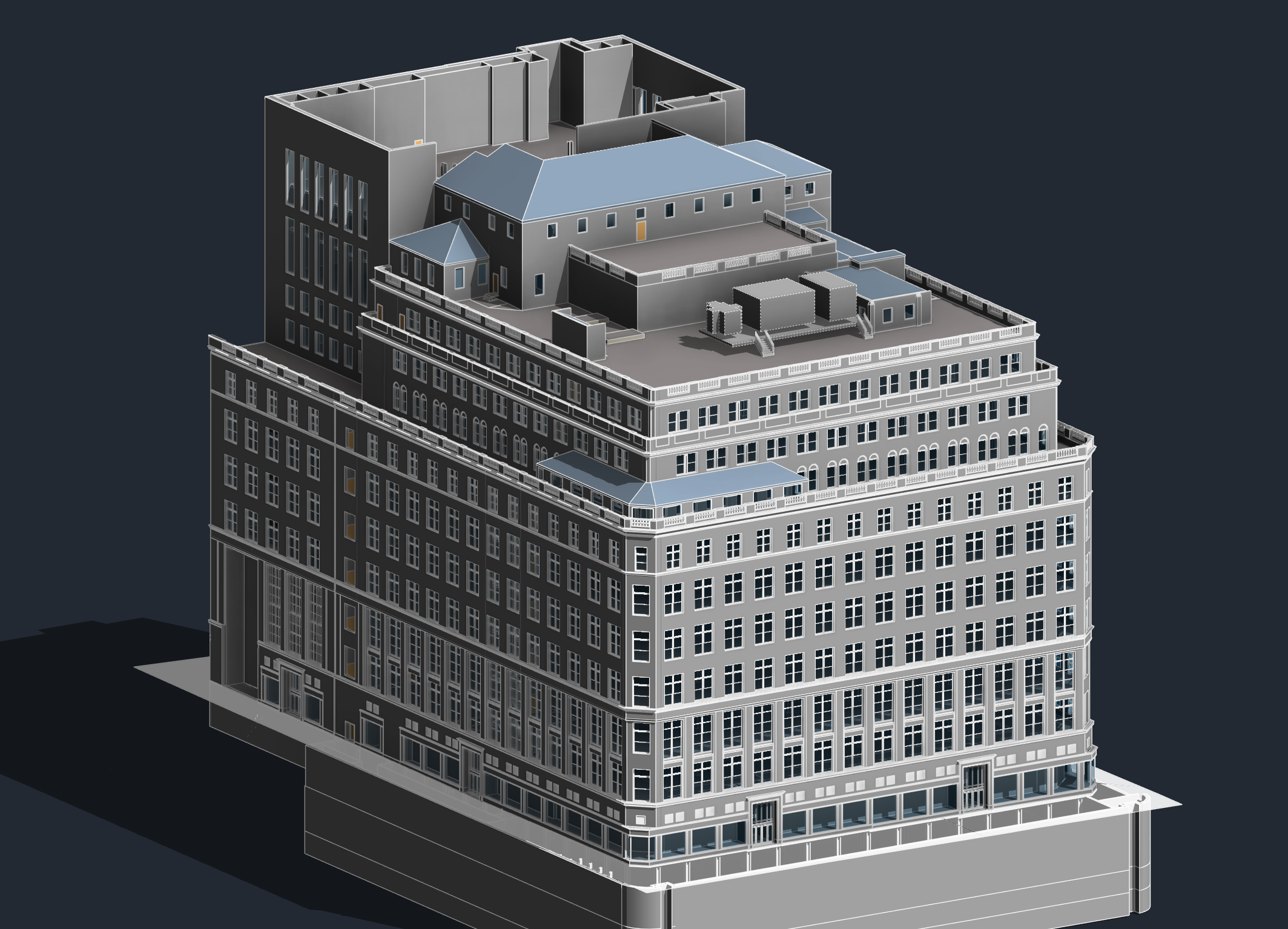
Whole-building understanding, not isolated fragments.
The model captures the flagship as a system: massing, setbacks, façade rhythm, roof structures, base conditions, and the spatial logic needed to support planning and renovation. It is the kind of deliverable that lets architects and owners work from something dependable rather than piecing understanding together from scattered files and incomplete legacy information.
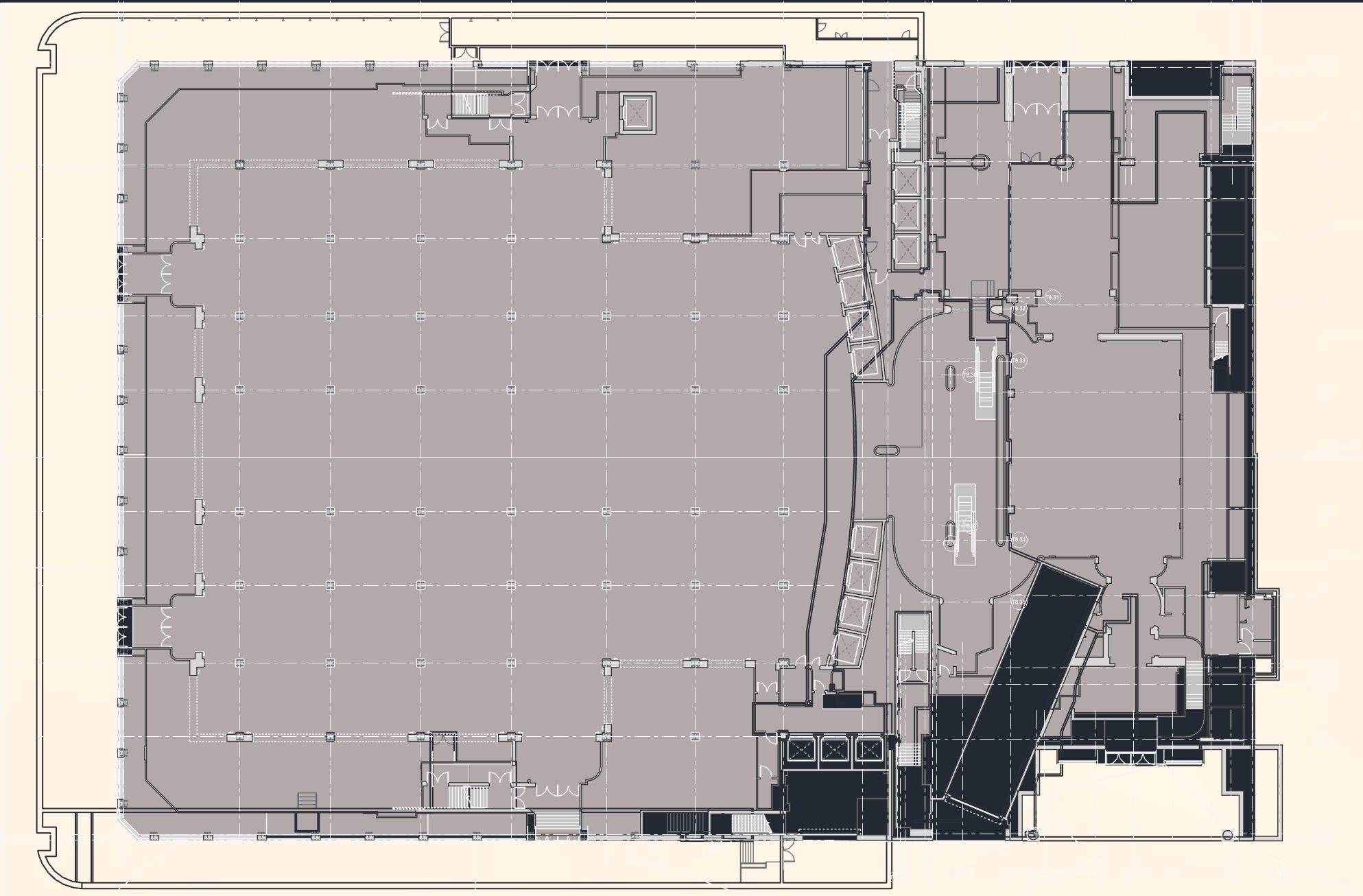
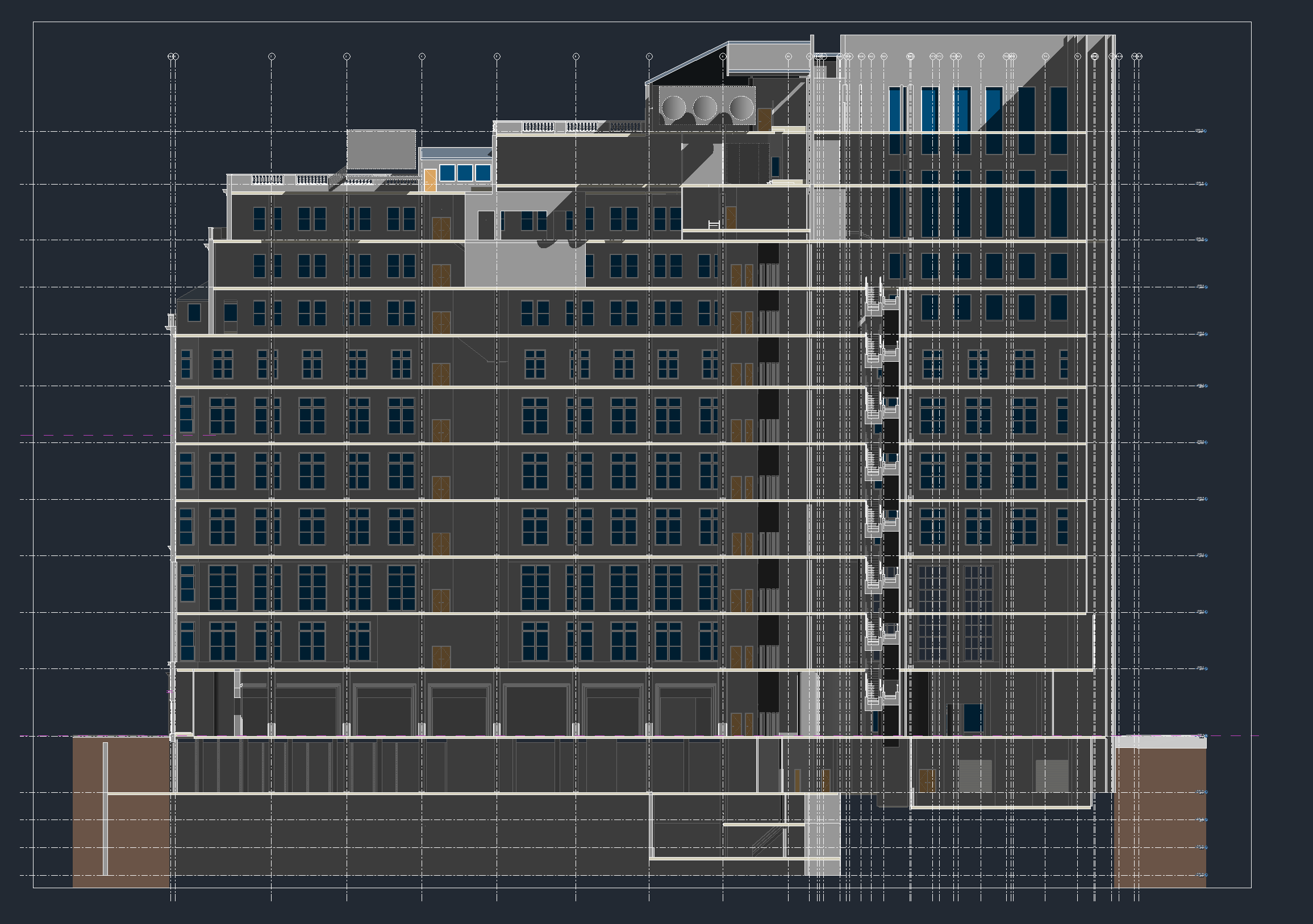
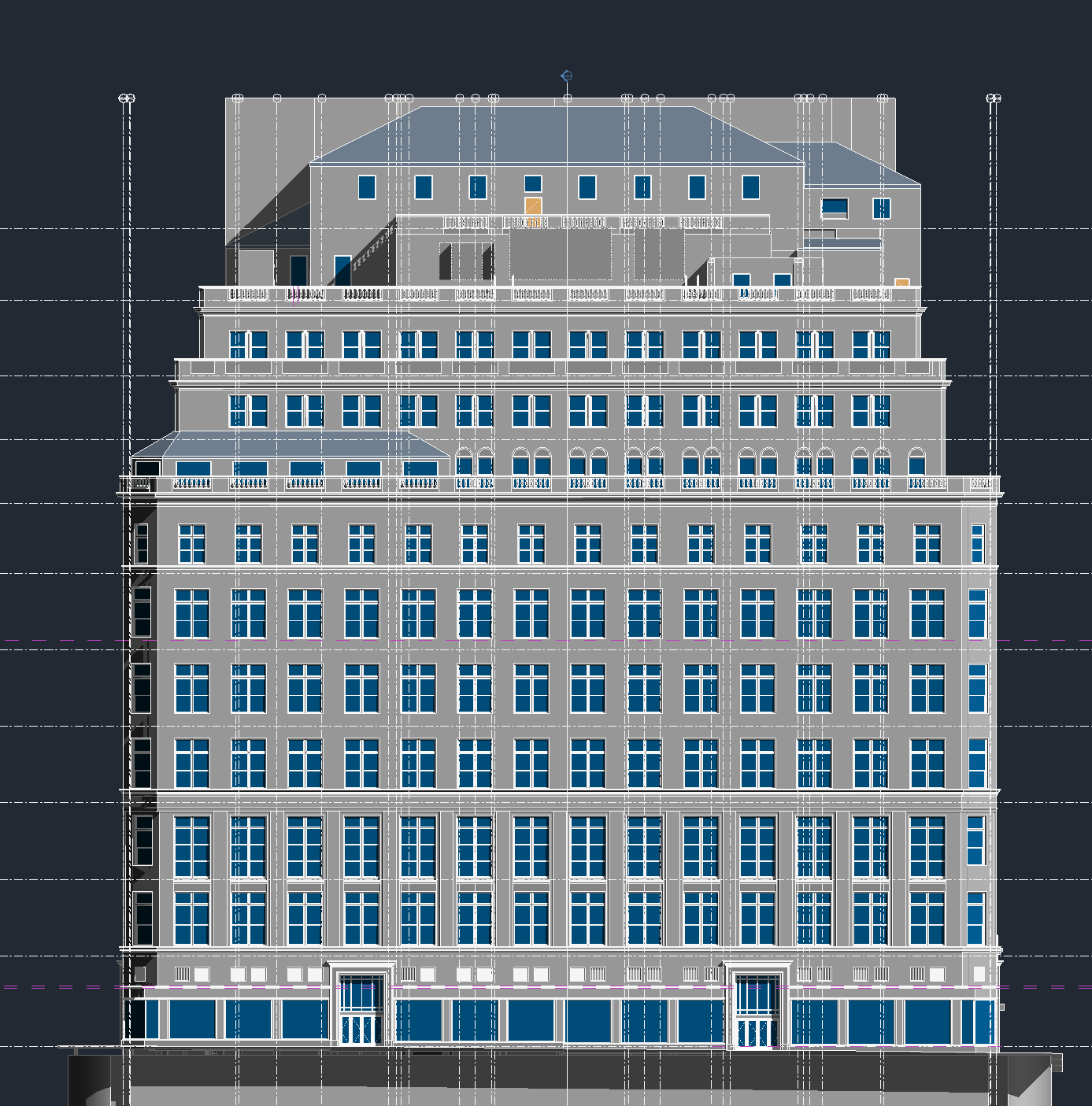
Plans, sections, elevations, and the logic behind them.
For existing buildings, good documentation is not just about geometry. It is about trust. Column grids need to align. Vertical circulation needs to make sense. Envelope conditions need to coordinate with what is actually there. These drawings and model views show the kind of organized baseline that teams can design from.

The hours were late. The work still had to be exact.
This was one of those projects where the context becomes part of the memory. Access windows ran overnight. Roof work came with rare Midtown views. And when “lunch” happens at 2 AM in Manhattan, The Halal Guys matter more than usual.
Night Shift Logistics
Most of the field effort happened between roughly 10 PM and 4 AM, when one of the busiest retail corners in New York was finally quiet enough to work. That meant disciplined setup, efficient capture, and no wasted motion.
Roof Access in Midtown
Working on the roof meant looking out over St. Patrick’s Cathedral and toward Rockefeller Center, a reminder that even technically focused building work can still put you in the middle of something memorable.
Longstanding Relationships
Completed with Langan during an earlier phase of our practice, the project quietly reinforces something that still matters now: we have been doing serious existing-building work with strong partners for a long time.
2 AM Lunch in New York
Overnight guards pointed the crew a couple of blocks over to The Halal Guys. It was open, it was excellent, and it remains a very New York detail in an otherwise highly technical assignment.
Ready to document an existing building with confidence?
From flagship retail and historic structures to large occupied properties, Pointknown delivers existing conditions documentation that gives owners, architects, and consultants a clear, usable starting point.
When the existing building matters, the baseline matters. Our work helps teams move from field conditions to organized, design-ready documentation—so the next phase starts with clarity instead of guesswork.