• Projects
  • Services
  • Software
  • About US
  • Blog
  • Contact
Pointknown

Residential | Commercial | Industrial

  • Projects
  • Services
  • Software
  • About US
  • Blog
  • Contact


Cambridge, Massachusetts • Radcliffe Yard / Harvard University Historic Campus Documentation

Harvard University
Radcliffe Yard

Pointknown documented multiple historic Radcliffe Yard buildings for ARC, creating a coordinated existing-conditions baseline for renovation planning, phased design work, and long-term institutional stewardship. For teams working in complex campus and civic environments, the value is simple: reliable information at the start.

Multi-Building Scope Historic Institutional Work Revit + CAD Deliverables Field-to-Model Workflow

Project Highlights

  • Existing-conditions documentation for Cabot House, Holmes Hall, Bertram Hall, and Eliot Hall
  • Interior and exterior capture aligned into one coordinated modeling workflow
  • Historic campus conditions translated into design-ready documentation, not just raw field data
  • A strong precedent for academic, civic, library, and preservation-focused documentation work
4 Key buildings documented within one coordinated campus assignment
Historic Institutional architecture captured for real renovation and planning use
Revit Model-first deliverables supported by linked scan and photo reference
Trusted Structured to support architects, consultants, and phased downstream work
Project Overview

A multi-building campus project where coordination mattered as much as capture.

At Radcliffe Yard, Pointknown was engaged to document multiple Harvard University buildings as existing conditions for ARC. The work required more than gathering measurements. It required turning a historic, active institutional environment into a clean, dependable digital starting point for design.

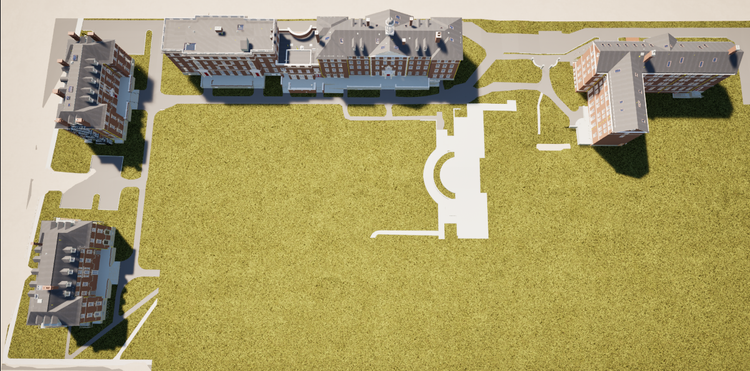
The assignment included Cabot House, Holmes Hall, Bertram Hall, and Eliot Hall. Each structure brought its own geometry, access realities, and architectural character, but the value came from treating the work as one coordinated documentation effort rather than a series of disconnected files.

Why It Mattered

Historic buildings. Active campus. Very little room for guesswork.

  • Historic campus buildings need to be modeled with discipline so architects can trust what they are seeing.
  • Multi-building institutional work benefits from a consistent field-to-model approach that keeps teams aligned.
  • Accurate existing conditions reduce repeat site visits, protect schedules, and help design teams move sooner.
  • The best deliverable is not raw data alone. It is usable information that helps the next team move with confidence.
Scope + Method

Measured once, coordinated carefully, delivered in formats teams can actually use.

Reality capture across building and site conditions

Pointknown used a layered documentation workflow combining terrestrial laser scanning, mobile capture where appropriate, targeted exterior and roof context capture, and comprehensive site photography to create a reliable field record of the project.

Registration, modeling, and QA in one workflow

Collected data was registered, reviewed, and translated into coordinated Revit models and 2D outputs. The emphasis was on clean model behavior, dependable geometry, and practical downstream usability for the architect and project team.

Built for institutional planning

This was not documentation for documentation’s sake. The work supported future renovation, phased planning, and long-term institutional asset understanding across multiple structures.

A relevant proof point for civic and academic work

Projects like this show Pointknown’s fit for complex public-facing properties where access, accuracy, coordination, and professional deliverables all matter. That includes libraries, campuses, and historic civic buildings.

Deliverables

Deliverables built for design teams, ownership groups, and downstream consultants.

Coordinated Revit models

Model-ready existing conditions for the documented buildings, structured to support design, review, and future updates.

2D plan and elevation outputs

CAD-based documentation for teams that still need traditional drawing deliverables alongside the BIM environment.

Linked reference data

Supporting point-cloud and photo reference for verification, QA, and confidence in the modeled result.

For complex institutional work, the real value is not just that a building was scanned. It is that the architect can begin from a trusted digital baseline without re-measuring, second-guessing, or rebuilding background information from scratch.

Why This Project Travels Well

A strong precedent for libraries, campuses, and preservation-minded institutions.

Historic context, handled professionally

Pointknown understands that older buildings need disciplined documentation, not assumptions. Historic geometry, layered changes, and character-rich conditions are treated as design inputs, not obstacles.

Multi-party coordination

Institutional projects involve architects, consultants, ownership groups, and facilities stakeholders. Deliverables need to serve all of them clearly. This project demonstrates that approach.

Ready for phased work

Whether the next step is study, planning, renovation, or long-term stewardship, a coordinated digital baseline helps teams move in phases without losing continuity.

Project Gallery

Project gallery

A look at the Radcliffe Yard documentation workflow, from campus context and building coverage to model-ready outputs.

3D plan-style overview of the Radcliffe Yard buildings documented by Pointknown
Harvard University Radcliffe Yard exterior campus view
Harvard building exterior documentation image
Revit or model view of Harvard project
Map-style graphic showing capture and documentation coverage for Radcliffe Yard
Campus aerial or oblique image for Harvard Radcliffe Yard
Existing conditions graphic or elevation output
Pointknown

Existing conditions documentation for buildings that deserve to be understood before they are changed.

From historic campuses to civic buildings to large reuse projects, Pointknown helps teams start with clarity. We capture what is there, organize it carefully, and deliver usable information in the formats architects, owners, and consultants actually need.

Start a Conversation View More Projects