

Phillips Exeter Academy
A full digital record of Exeter’s flagship academic building—captured to support future HVAC infrastructure planning, reduce disruption to active campus life, and preserve the architectural character of a landmark institutional space.
Historic architecture,
captured with modern precision
For the PEA Academy Building, Pointknown documented the existing conditions of this historic academic facility to create an accurate digital foundation for future renovation and planning. Through coordinated reality capture and building documentation, the project transformed complex existing conditions into reliable, design-ready deliverables.
Historic institutional buildings require more than basic measurements. Architectural character, structural relationships, floor layouts, and long-term campus planning all depend on dependable existing conditions. Our role was to capture those conditions accurately, translate them into coordinated digital models and technical drawings, and provide the project team with a trusted starting point for the next phase of work.
Every architectural detail tells part of the building's story.
The Academy Building is more than a collection of rooms and dimensions. Its historic character, architectural details, formal interior spaces, and distinctive exterior elements all contribute to how the building is understood, maintained, and renovated. Pointknown documented these existing conditions with precision, creating a dependable digital record that preserves the building's character while supporting future design and restoration efforts.
A complete historic documentation workflow from capture to handoff.
For the PEA Academy Building, Pointknown created a structured existing-conditions package that captured the character, geometry, and details of a historic academic facility—transforming field information into reliable digital resources for future renovation and planning.
Capture
Existing conditions were documented throughout the Academy Building, capturing architectural details, interior spaces, and critical building elements that define the historic character of the facility.
Model
Field information was translated into coordinated digital models and documentation, creating an accurate representation of the building's existing conditions for design and renovation planning.
Deliver
The final package provided the project team with organized digital files and technical documentation, allowing architects and consultants to move forward with a dependable understanding of the existing building.
Different spaces required different levels of precision.
The Academy Building required a flexible documentation approach. Pointknown combined multiple capture methods to preserve important architectural spaces while efficiently documenting the everyday areas that make up the complete building.

A balanced workflow for a complex campus building.
Rather than applying one capture method everywhere, Pointknown selected the right approach based on the purpose of each space. High-detail scanning was used where geometry and architectural character were critical, while efficient workflows documented secondary areas with the accuracy needed for the final building record.
Multiple buildings. One coordinated digital record.
The Academy Building and Frederick Mayer Arts Center required more than individual room documentation. The connected campus structures needed to be understood as one system, with accurate relationships between building volumes, circulation paths, and architectural transitions.
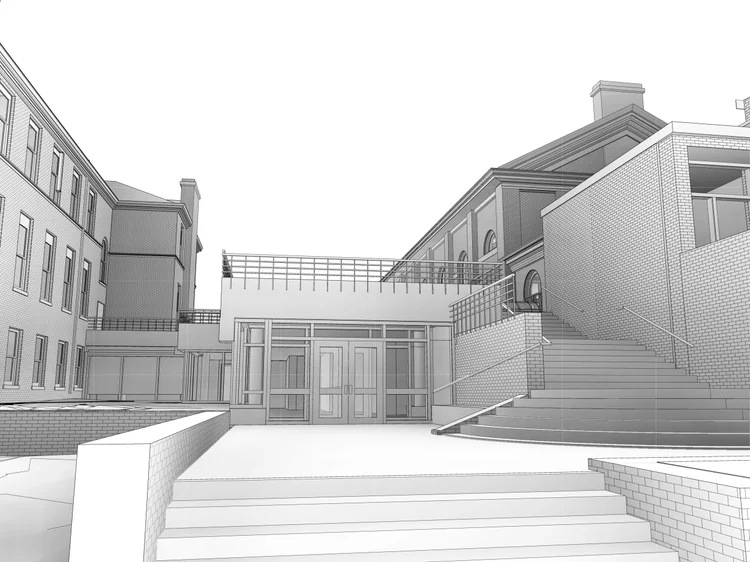
The model needed to understand the whole building system.
Historic academic buildings often evolve over time, creating complex relationships between original construction, additions, connectors, and modern interventions. The existing-conditions model needed to represent those relationships accurately so future teams could evaluate design decisions with confidence.
Historic architecture captured with digital precision
A detailed documentation package focused on preserving the Academy Building’s architectural character, interior spaces, and defining features—creating a reliable digital record for future planning and renovation.

Complex interior spaces modeled clearly
The auditorium and assembly spaces were documented with the level of detail needed to understand geometry, circulation, and architectural character.

Spaces preserved beyond measurements
Formal public interiors were captured as functional spaces with architectural identity, supporting both understanding and future decision-making.

The details that define the building
Trim, openings, circulation elements, and architectural features were documented to support future restoration and intervention.

Landmark features documented accurately
The cupola and roof-level elements were captured as part of the building record, preserving the features that define the Academy’s presence on campus.
Preserving the details that define a historic building
Before major HVAC and infrastructure upgrades could move forward, the Academy Building required a dependable record of its existing conditions. Pointknown created a digital foundation that captured architectural character, interior spaces, and significant building elements—giving the project team a clearer understanding of the structure before intervention began.
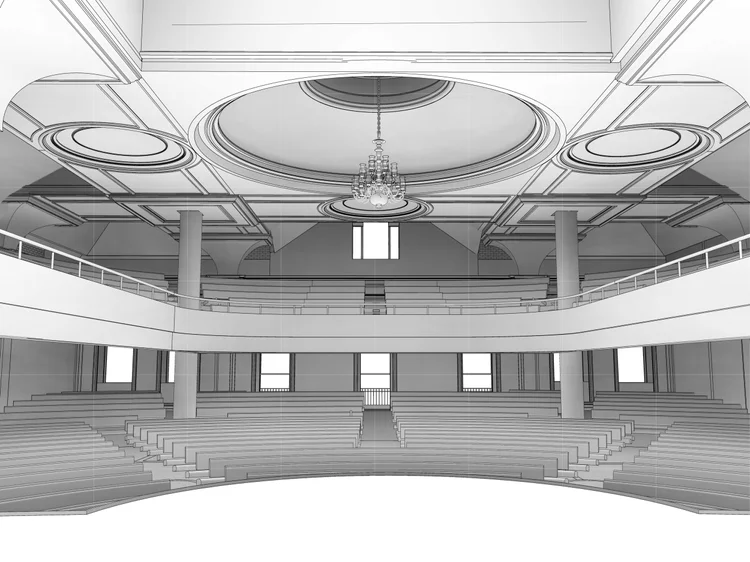
The deliverable becomes the building record.
For a historic academic building, accurate documentation supports more than a single renovation effort. It provides the design team with a reliable reference for infrastructure planning, preservation decisions, coordination, and future maintenance while reducing unnecessary investigation inside a sensitive structure.
A complete digital record of a historic institution
The value of the Academy Building documentation is not a single model or drawing set. It is the complete collection of digital information that allows future teams to understand the building, preserve its character, and plan with confidence.
Revit Existing Conditions Model
A structured BIM model capturing the building’s geometry, spaces, and architectural relationships for future renovation and planning efforts.
3D Visualization Model
Detailed 3D views provide a clearer understanding of complex interiors, assembly spaces, circulation, and historic architectural character.
CAD + Documentation Set
Organized drawings and technical references provide a dependable baseline for review, coordination, and future building work.
Architectural Detail Capture
Important features including trim, openings, roof elements, and significant interior spaces were documented as part of the building record.
Long-Term Digital Archive
A complete handoff package creates an accessible reference that supports future teams beyond the initial documentation effort.
Experience shows up in the handoff
The best documentation teams do not simply collect data. They know what matters, what to ignore, what to model, what to share, and how to package it so the next team can work.
We scope for the decision ahead
Each capture effort is shaped around what the client, architect, consultants, and builder need to understand next.
We know the deliverable ecosystem
Revit, CAD, SketchUp, PDF, drone media, 360 photography, and shared file structures all play different roles.
We make complex properties easier to communicate
The goal is not to show every piece of data. The goal is to make the right information accessible, clear, and usable.
If you are planning, renovating, leasing, or evaluating a building, clear existing conditions matter.
Pointknown helps design teams and property stakeholders move forward with confidence by turning existing buildings into usable, decision-ready information.