
Historic buildings deserve more than approximation.
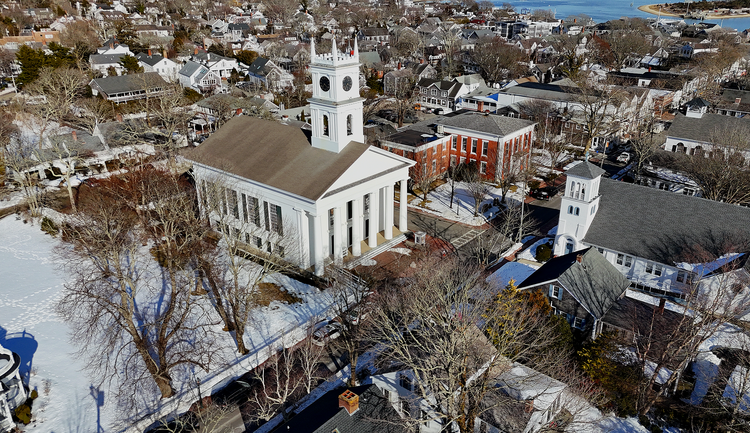
At the Old Whaling Church in Edgartown, Pointknown documented a complex historic structure and its immediate site with a full reality capture workflow designed to support preservation, planning, and future improvements.
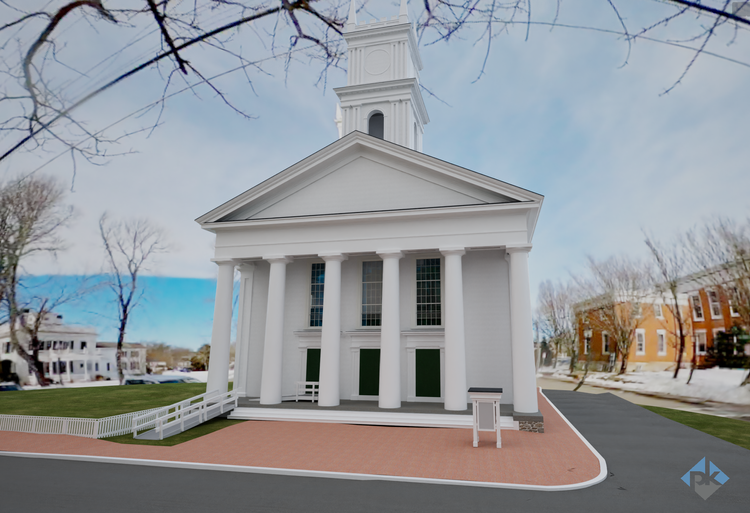
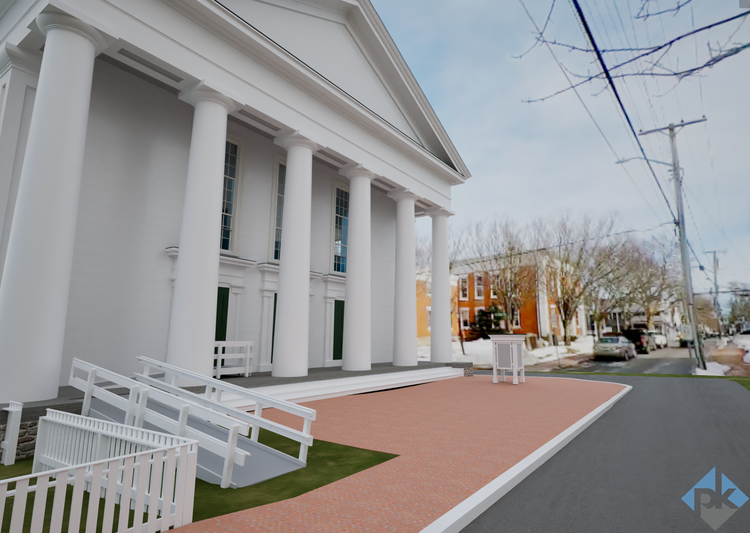
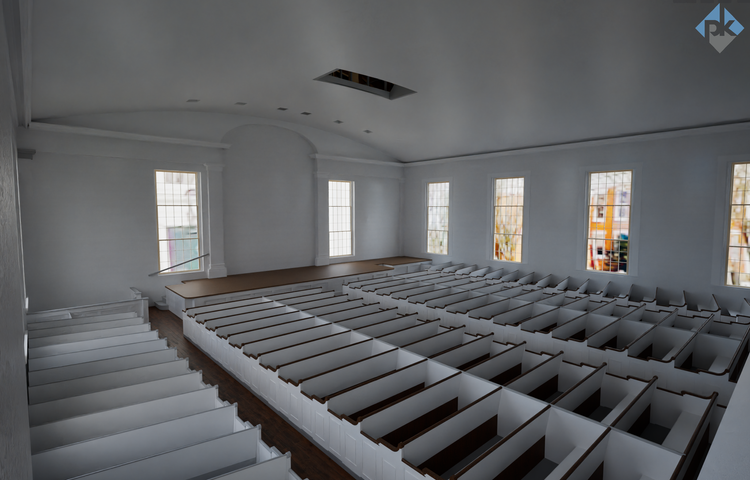
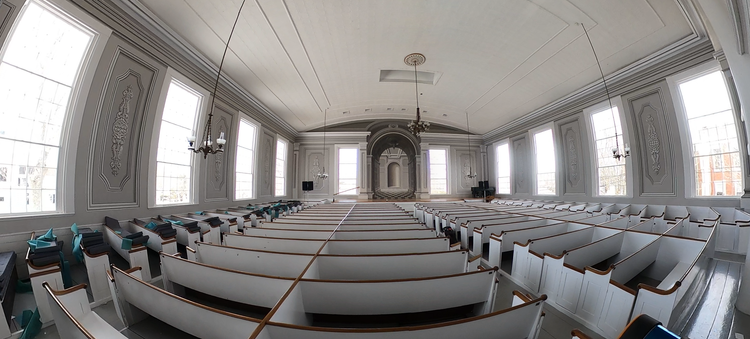
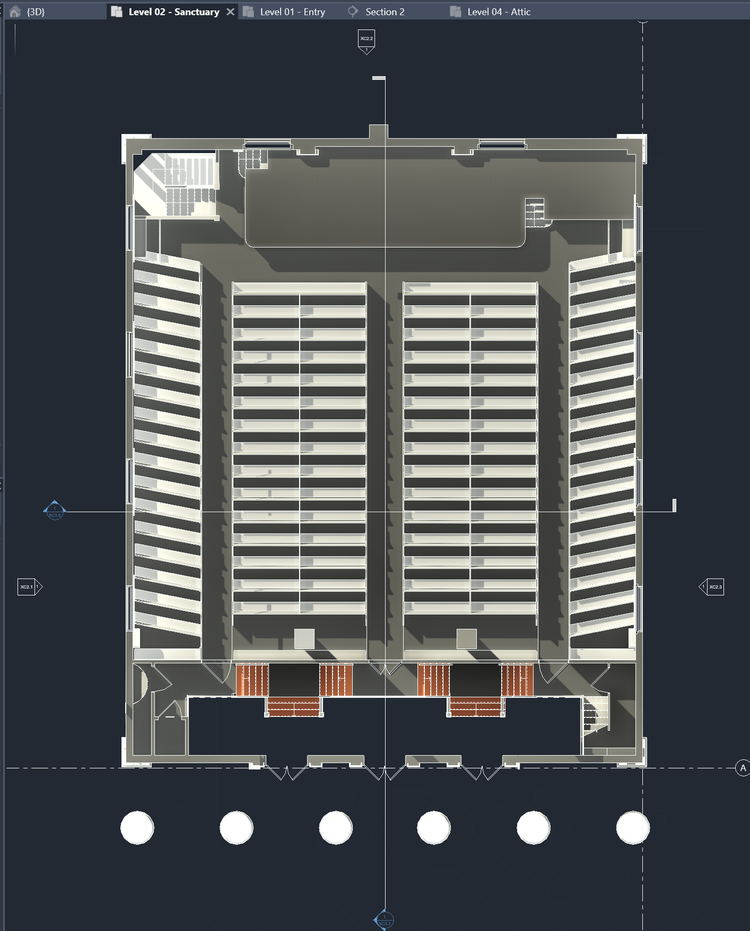
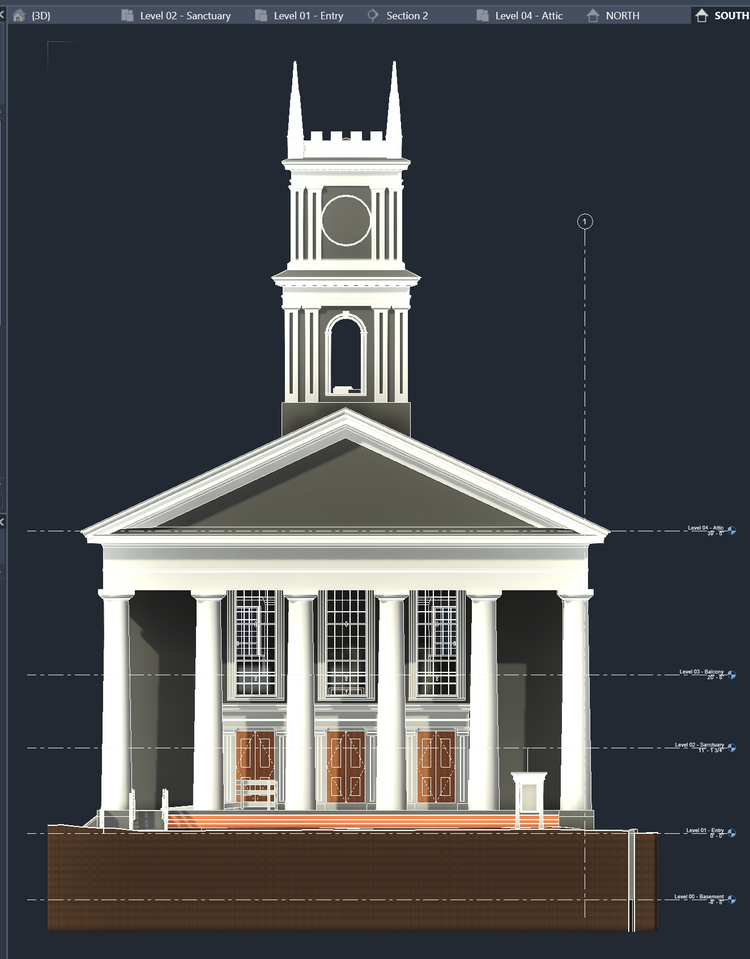
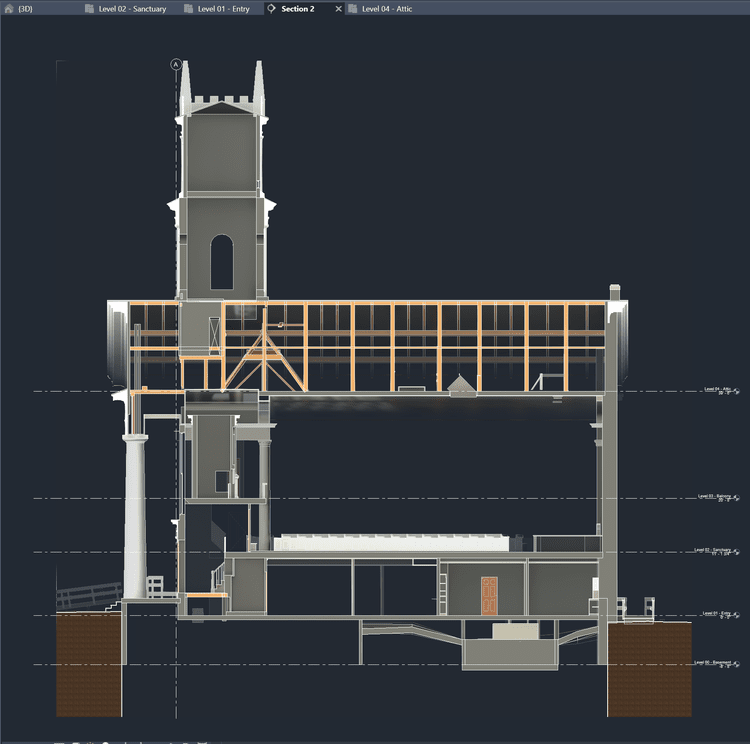
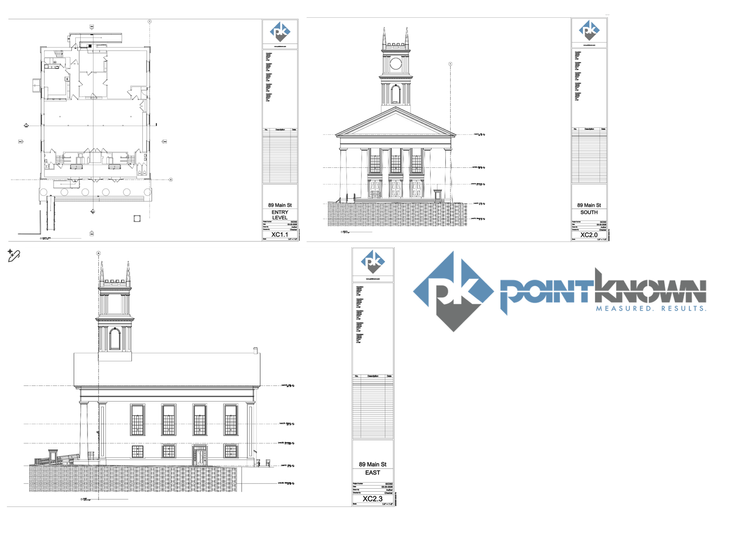
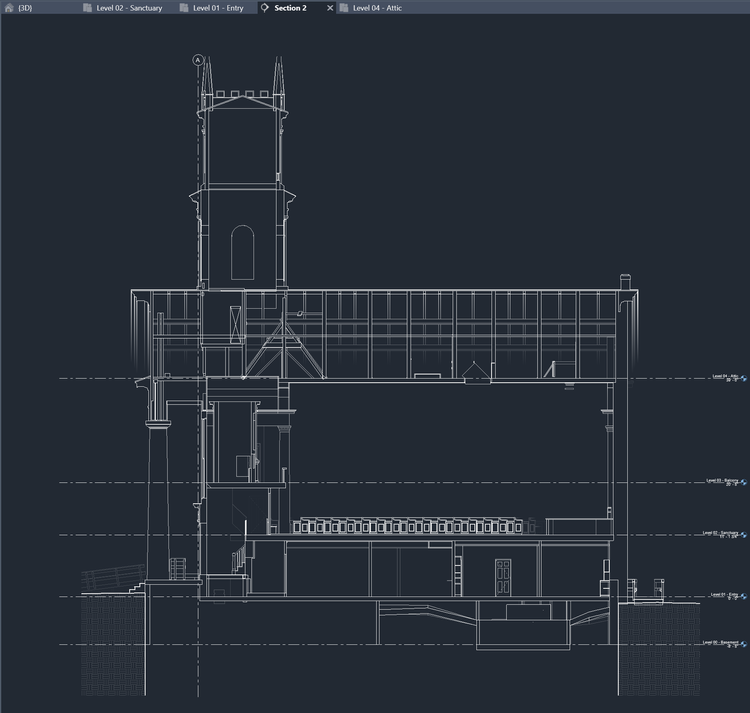
This project included mobile LiDAR scanning, drone photography, 360 imagery, adjacent site and topo capture, and a detailed Revit model of the church, including exposed structure and the steeple. The resulting digital twin was also translated into SketchUp and used to generate CAD plans, creating a flexible foundation for design, documentation, and long-term stewardship.
Project Overview
The Old Whaling Church is one of Martha’s Vineyard’s most recognizable historic structures. Capturing it properly meant balancing accuracy, efficiency, and respect for the building’s character.
Pointknown documented more than 10,000 square feet of structure and grounds at 89 Main Street in Edgartown, Massachusetts, delivering a complete existing conditions package for Vineyard Preservation Trust. The scope extended beyond floor plans and basic geometry. It included the spaces people see, the spaces they rarely see, and the structural character that makes the building what it is.
Scope of Work
Services provided included:
Mobile LiDAR scanning of the church interior and exterior
Drone photography and aerial capture.
Fly Over is Available on YouTUbe
360 still photography and immersive video
Immediate adjacent site and topo documentation, including road edge, lawn areas, front brick entry, and rear parking
Full Revit model including exposed structure and steeple
SketchUp export from the model
CAD plan exports generated from the modeled data
Gaussian Splat capture for immersive spatial viewing
You can ‘walk’ the exterior here
Supporting visualization assets including Twinmotion renderings with HDRI backgrounds derived from 360 photography
Challenges
Historic buildings rarely make documentation easy.
At Old Whaling Church, the work required navigating tight circulation, basement conditions, steeple access, and the irregular geometry that comes with age, craftsmanship, and layered change over time. The goal was not simply to collect data, but to represent the building in a way that would be genuinely useful to architects, preservation teams, and stakeholders making decisions about its future.
That meant taking the time to capture what matters: structure, character, context, and the relationships between them.
Outcome
The result is a detailed digital record of the church and surrounding site that can support future improvements, preservation planning, and change tracking over time.
Instead of relying on fragments, assumptions, or outdated drawings, the project team now has a coordinated base of information that can be used across platforms and workflows—from CAD to Revit to SketchUp to immersive viewers and visualizations.
For historic properties in particular, accurate existing conditions are not just a convenience. They are a foundation for making better decisions.
Measure once. Design right.
Pointknown helps architects, owners, and preservation teams move from uncertainty to clear, actionable existing conditions documentation—whether the building is straightforward, historic, or somewhere in between.